So it was, that Zacharias was serving as priest before God in the order of his division, when his lot fell to burn incense when he went into the Temple of […]
Si eres predicador, probablemente conoces el nombre William Barclay, autor de la serie comentarista The Daily Study Bible Series [La Biblia de Estudio Diario] Barclay es un recurso fuente peligroso. […]
During the days of Herod, there was a certain priest named Zacharias, of the division of Abijah. Presumably, Luke had verified this detail, as could Theophilus, emphasizing the historicity of these events. […]
Charles Dickens’s A Tale of Two Cities opens with the memorable line, “It was the best of the times, it was the worst of times…” Some periods are infamous for […]
A veces la gente dice que la fe que salva es la confianza en una persona. ¿Qué significa eso, exactamente? John W. Robbins explica a continuación cuándo esta expresión tiene […]
In the last blog, we explored Luke’s purpose in writing his Gospel, and I suggested it was quasi-apologetic—meant to stabilize or to reinforce faith in Christ. Now we can ask […]
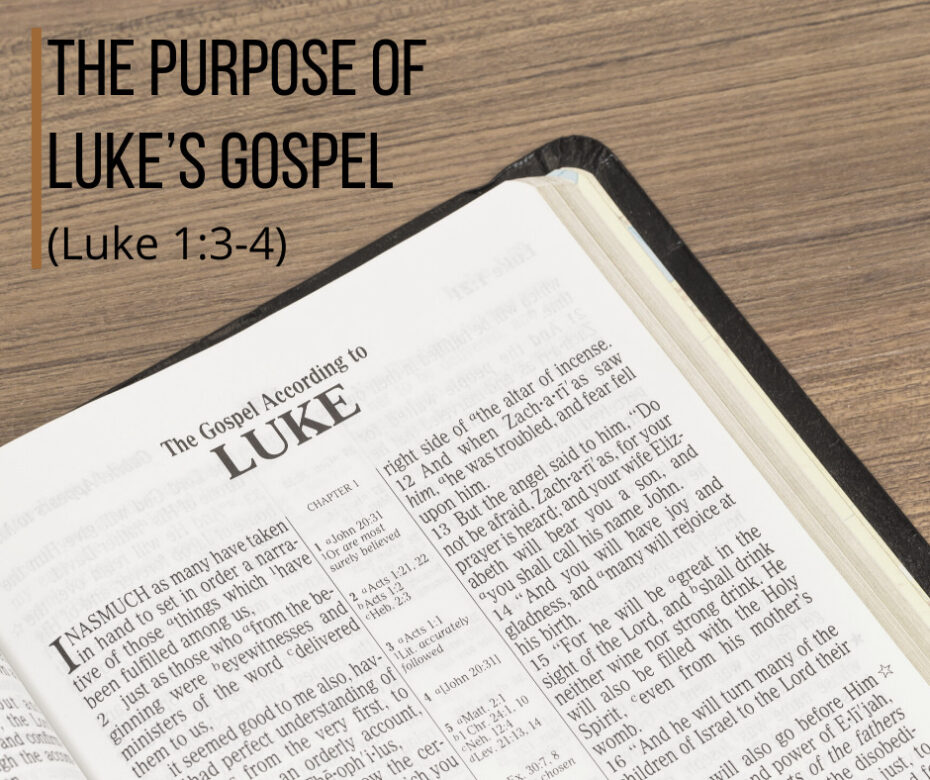
People write books for specific reasons, and understanding those reasons can help you understand a book as a whole. So why did Luke write his Gospel? What was his purpose? […]
¿Qué significa estar seguro de mi salvación?” Esa es una pregunta que me hacen a menudo. La gente quiere tener la seguridad de ser salva, pero a menudo está confundida. […]
Por mucho tiempo, la industria del diamante ha sido arruinada por la violencia y explotación. Esa trágica realidad ha motivado esfuerzos para descubrir maneras de hacer diamantes sintéticos. Recientemente, unos […]
I just finished working through suggestions by Philippe Sterling, Ken Yates, and Geoff Stevens on my commentary on Genesis for the upcoming Grace Old Testament Commentary, “Volume...
I just finished working through suggestions by Philippe Sterling, Ken Yates, and Geoff Stevens on my commentary on Genesis for the upcoming Grace Old Testament Commentary, “Volume...
The primary source of Grace Evangelical Society’s funding is through charitable contributions. GES uses all contributions and proceeds from the sales of our resources to further the gospel of grace in the United States and abroad.